
Two plastic-free sponges, two different jobs
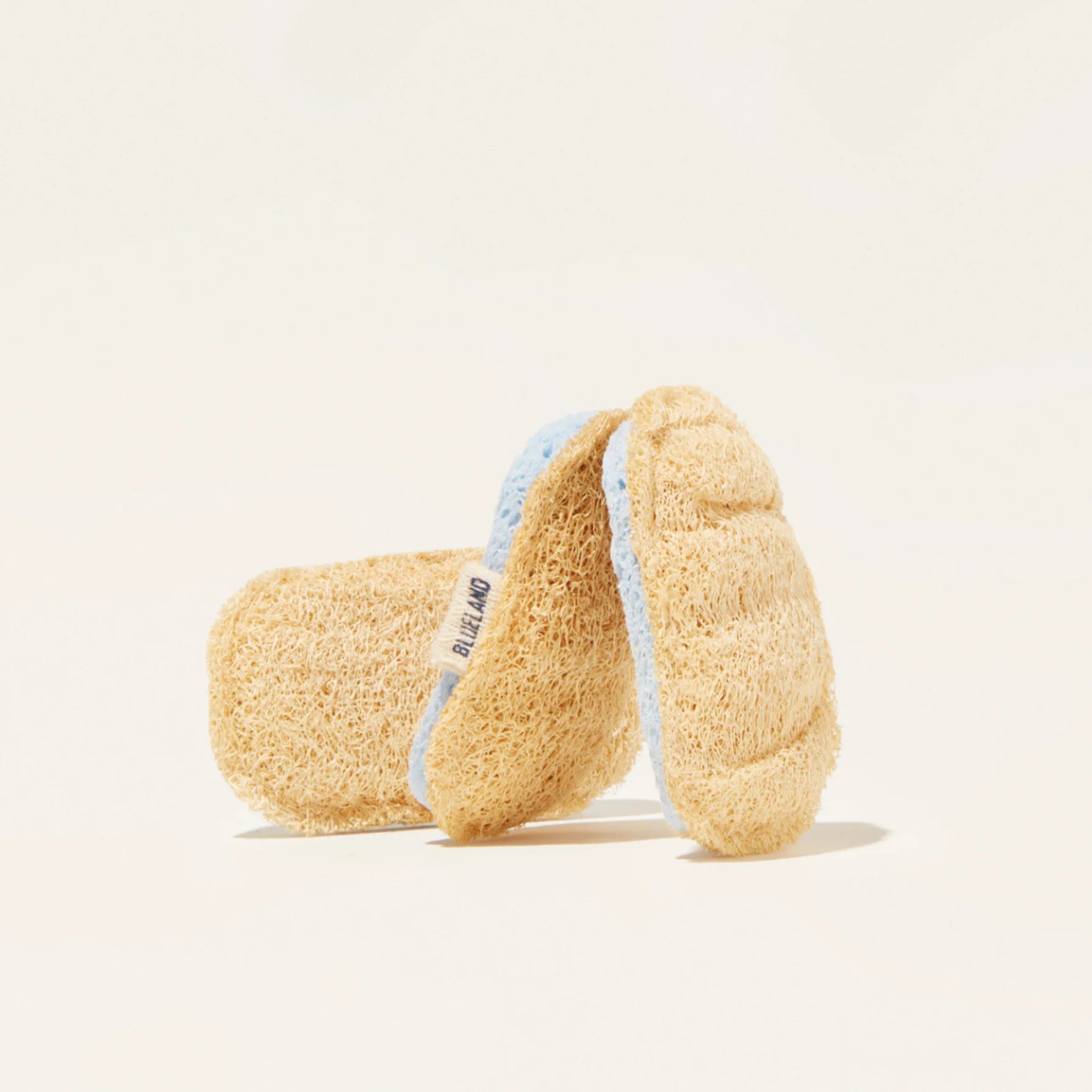
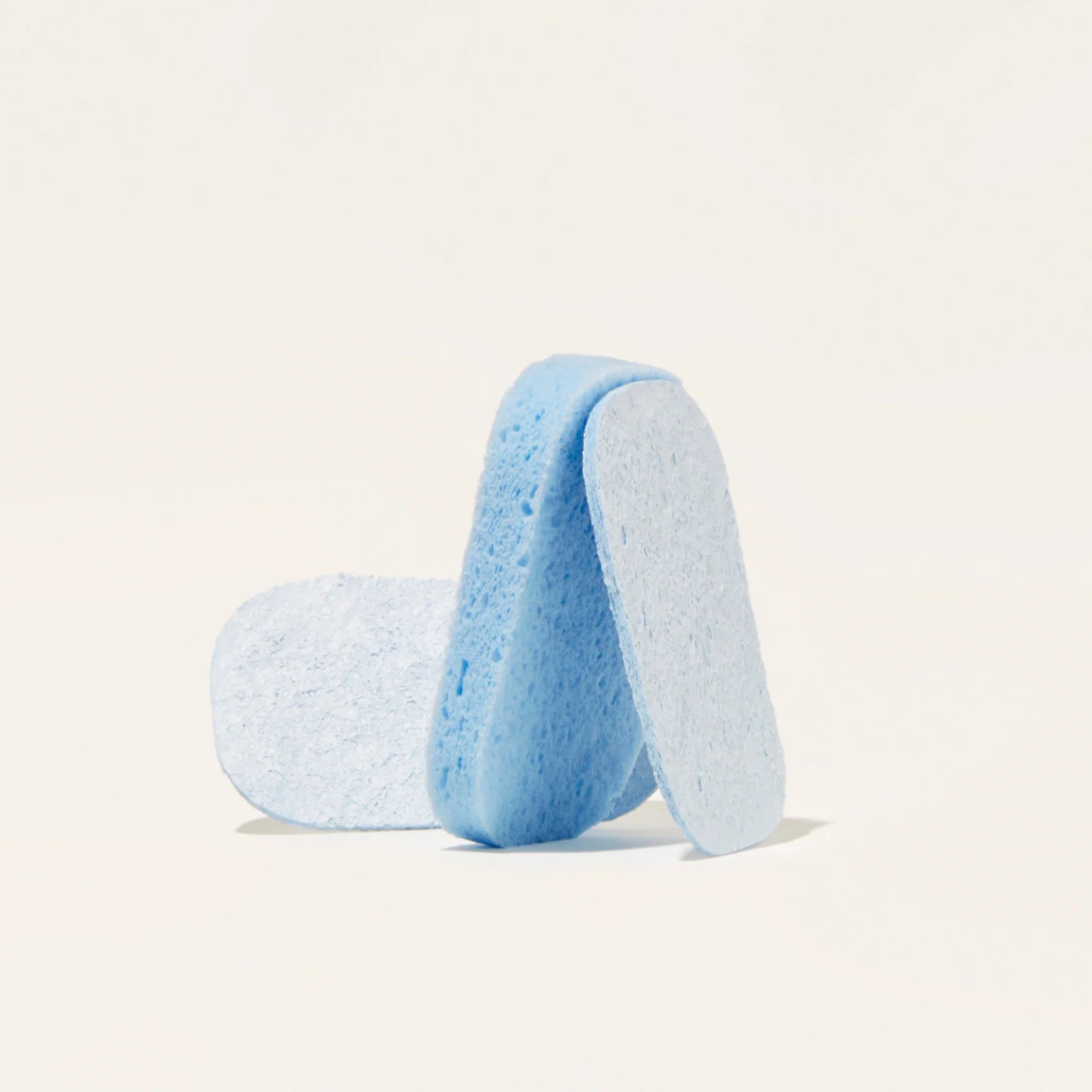
Blueland's Scrub Sponge and Pop-Up Sponge both replace conventional plastic kitchen sponges, but they are built for different moments at the sink. The Scrub Sponge is a dual-action tool: a loofah side for scrubbing stuck-on food and a natural cellulose side for washing away grime. The Pop-Up Sponge is a compostable, plant-based cellulose absorber that arrives flat and compact—about one-fifth the size of a regular sponge—and pops up when you add water.
That difference in construction is the heart of this comparison. If you need to decide which sponge to buy—or whether to keep both on hand—start with the type of mess you face most often, then weigh storage and pack size.
What each sponge is made for
- Scrub Sponge: Dual-action design: a loofah side for scrubbing stuck-on food and a natural cellulose side for washing away grime. This is the key reason to choose the Scrub Sponge for pots, pans, and baked-on residue—it gives you a scrubbing surface and a washing surface in one item.

Scrub Sponge - Pop-Up Sponge: Made with compostable, plant-based cellulose and described as ultra-absorbent, with natural plant cellulose that doesn't leave a trace of food behind. This points to the Pop-Up Sponge as a wiping and absorbing sponge for dishes, counters, and spills rather than a heavy-duty scrubber.
Pop-Up Sponge
Scrub Sponge vs. Pop-Up Sponge at a glance
- Scrubbing power: The Scrub Sponge has a dedicated loofah side for stuck-on food. The Pop-Up Sponge is described as an absorber, not a scrubber, so it is the weaker choice for tough, dried-on messes.
- Absorbency and washing: The Pop-Up Sponge is described as ultra-absorbent plant cellulose that doesn't leave a trace of food behind. The Scrub Sponge's cellulose side is for washing away grime, but the supplied information does not describe it as ultra-absorbent.
- Storage before use: The Pop-Up Sponge arrives flat and compact—about one-fifth the size of a regular sponge—so it stores easily until you add water. The Scrub Sponge's pre-use storage is not described in the supplied information.
- Sanitizing: Both sponges can be sanitized in the dishwasher or by boiling, according to the supplied product details.
- Pack sizes: Both come in 3-, 6-, and 9-sponge packs, so you can match the quantity to how often you swap sponges.
Which sponge for dishes, and which for pots and pans?
For everyday plates, glasses, and light washing, the Pop-Up Sponge's absorbent cellulose does the job and takes up very little space before use. Its compact flat form is also handy if you like to keep a spare sponge in a drawer or small kitchen.
For the best dish sponge for pots and pans, the Scrub Sponge is the more logical pick because of its loofah scrubbing side. If you are specifically looking for a non-scratch scrub sponge for kitchen use, note that the supplied information does not include a non-scratch claim for either sponge. The Scrub Sponge pairs a loofah side with cellulose, but you should test it on a small area of any delicate surface first and rely on your own judgment for nonstick pans.
Pop-up sponge uses beyond the sink
Because the Pop-Up Sponge is a compact, absorbent cellulose sponge, its uses follow from absorption and wiping rather than scrubbing. The supplied information supports these practical roles:
- Wiping down dishes and surfaces: The cellulose is described as ultra-absorbent and as not leaving a trace of food behind, which suits washing and wiping tasks.
- Storing spares in tight spaces: It arrives flat at about one-fifth the size of a regular sponge, so unused sponges take up minimal room.
- Light everyday cleaning: Use it where you need absorption and a soft wipe rather than a scrubber. For stuck-on food, reach for the Scrub Sponge instead.
Construction and durability details
- Scrub Sponge: 100% plastic-free and hand-sewn with cotton thread for strength, instead of plastic glues or adhesives. If you want a scrubber built without plastic glues, the Scrub Sponge's cotton-thread construction is a relevant difference.
- Pop-Up Sponge: Compostable, plant-based cellulose and plastic-free. This confirms the Pop-Up Sponge fits a plastic-free kitchen and can be composted, which matters if end-of-life disposal is part of your decision.
Price and pack size: what the catalog shows
The catalog lists the Scrub Sponge at USD 8.68 (comparison price USD 14.00) and the Pop-Up Sponge at USD 7.92 (comparison price USD 12.00). Both are available in 3-, 6-, and 9-sponge packs, so the per-sponge cost depends on the pack you choose. The supplied information does not include per-sponge pricing or how long either sponge lasts, so treat pack size as a quantity decision rather than a durability claim.
How to choose for your kitchen
- Choose the Scrub Sponge if…: You regularly scrub stuck-on food from pots and pans, want a loofah scrubbing side, and prefer a sponge that is hand-sewn with cotton thread rather than plastic glues.
- Choose the Pop-Up Sponge if…: You mainly wash and wipe dishes, want an ultra-absorbent cellulose sponge, and value compact flat storage before use.
- Keep both if…: You want one sponge for scrubbing and another for absorbing and wiping. Both sanitize the same way—dishwasher or boiling—so they fit the same cleaning routine.


